


I first heard of cohousing during my architectural studies and immediately felt drawn to it. In a society where everyone is more isolated, I saw it as a precious opportunity for genuine connection. It was a reminder that architecture should be social, free of outdated capitalistic models and benefit the people first and foremost. It can do so much more than just put a roof over people’s heads! With the uncertain political climate creating anxiety, and a housing crisis with increasing prices, more and more people are searching for an alternative housing model. Aware of these challenges, I spent the last year volunteering at the CoHousing Budapest Association, and realized how essential cohousing could be for people. This experience raised a question: how can architectural design improve interpersonal relationships.
But what exactly is cohousing ? This concept was imagined in Denmark to create a different kind of housing model, outside of the conventional norm of the 1960s. The Cohousing Budapest Association defines it as “a form of housing where residents improve their living conditions and environment through shared goals, common interests, and the power of collective effort. Residents voluntarily and consciously commit to community life with one another, sharing spaces, resources, tasks, and activities to the extent they themselves define.”
What does this really mean? Cohousing can come in many forms. Whether it’s a cluster of separate houses in the suburbs, or a residential building in the city, everyone can find their pick. The project is built on the basis of a collaborative participation between the residents, the architect, and in some cases, the developers. Residents have a say in how and where they want to live, connected by similar values. Many cohousing projects yearn for diversity and inclusion, with a goal that goes beyond themselves and a wish to have a greater positive impact on society. The Vinzirast Mittendrin project in Vienna helps integrating homeless people within their community, while the Que(e)rbau project in Vienna, focuses on LGBTQ+ rights. According to Bruno Sandbichler, resident and architect of the Grüner Markt Cohousing project in Vienna, “It’s healing people to live in a community”, but how can we design a successful cohousing project ? How can architectural design improve interpersonal relationships ? That’s what I will explore by visiting 9 different cohousing projects and interviewing its residents and architects.
You can access the cohousing project overview directly at this link : https://canva.link/dewghfqxino8f1h
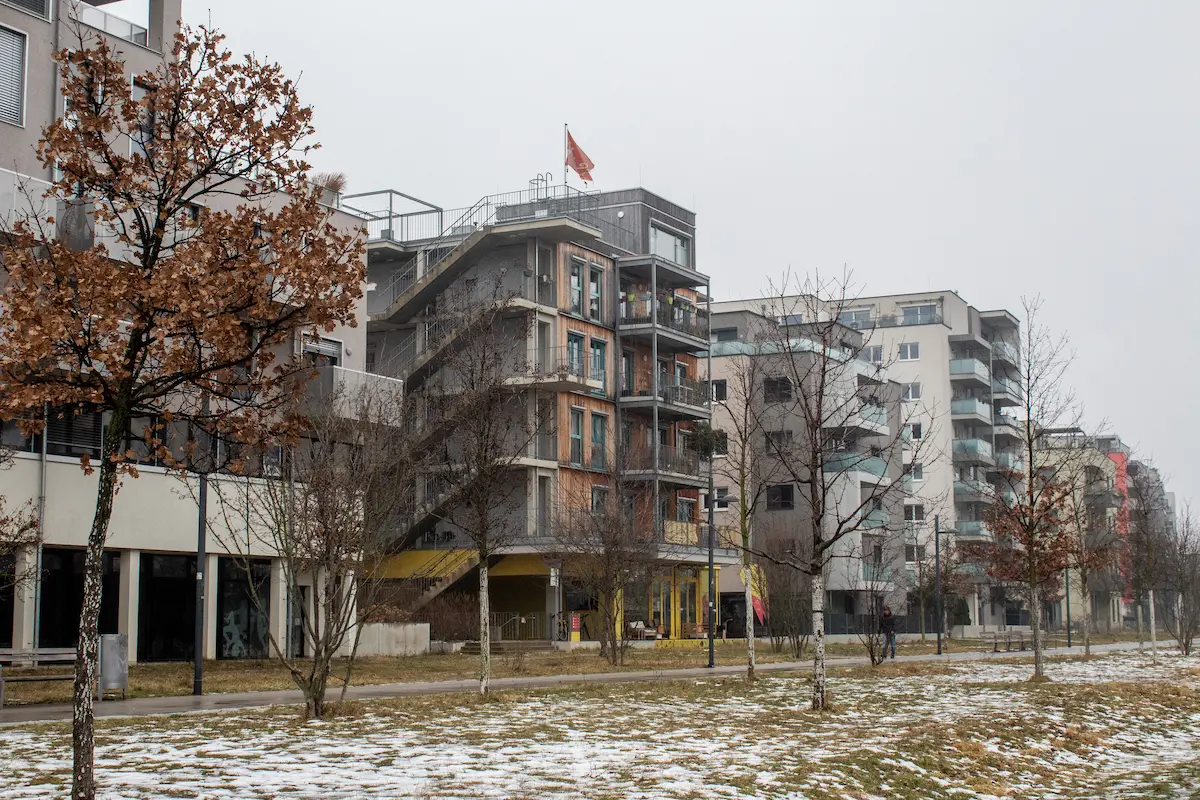
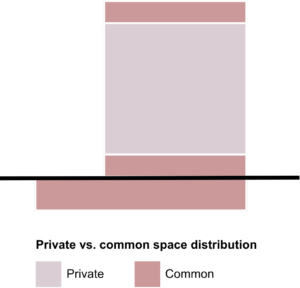
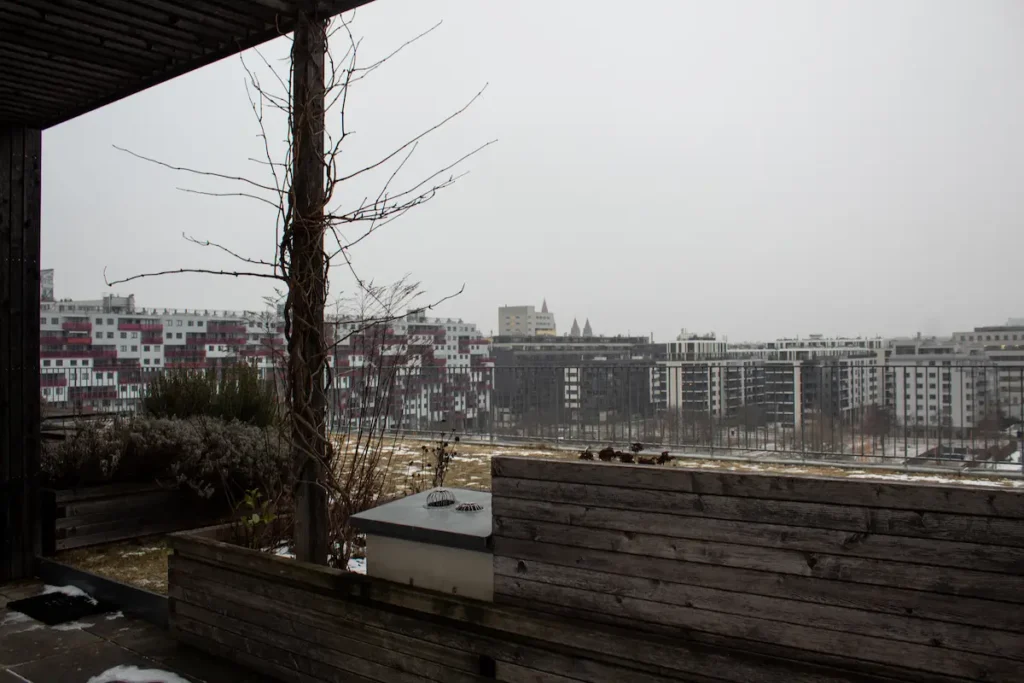
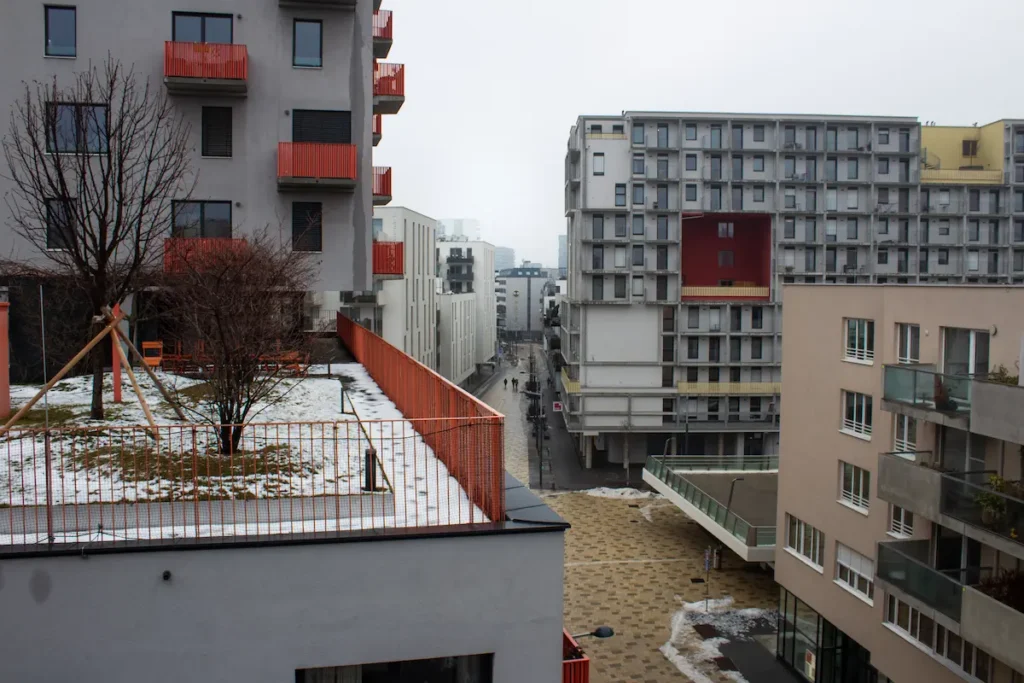
A cohousing project balances private and communal functions. People can relax in the privacy of their own space while still receiving the support of a community. These projects are often organized around the same hierarchy :semi-public – private – communal. Marcell Komlós, a resident of Gleis 21, describes it as an inverted sandwich. He explains that“usually the interesting things in the sandwich are in the middle, but here the interesting things are on the top and at the bottom.” The ground floor and the rooftop are generally reserved for community use, while the floors in between hold private apartments. In some cases, the ground floor can even be open to the public, if the projects offer a service such as a restaurant or café. This creates a continuous flow of movement within the building. Residents can easily run into each other, igniting genuine, spontaneous meetings. In Auenweide, a cohousing project in the suburbs of Vienna, the communal functions are all gathered in one separate house. Instead of running into your neighbors on the stairs, or in the hallway, you run into them in the garden, or pedestrian path. The communal house is placed in a central position, facing the garden and the children’s playground.
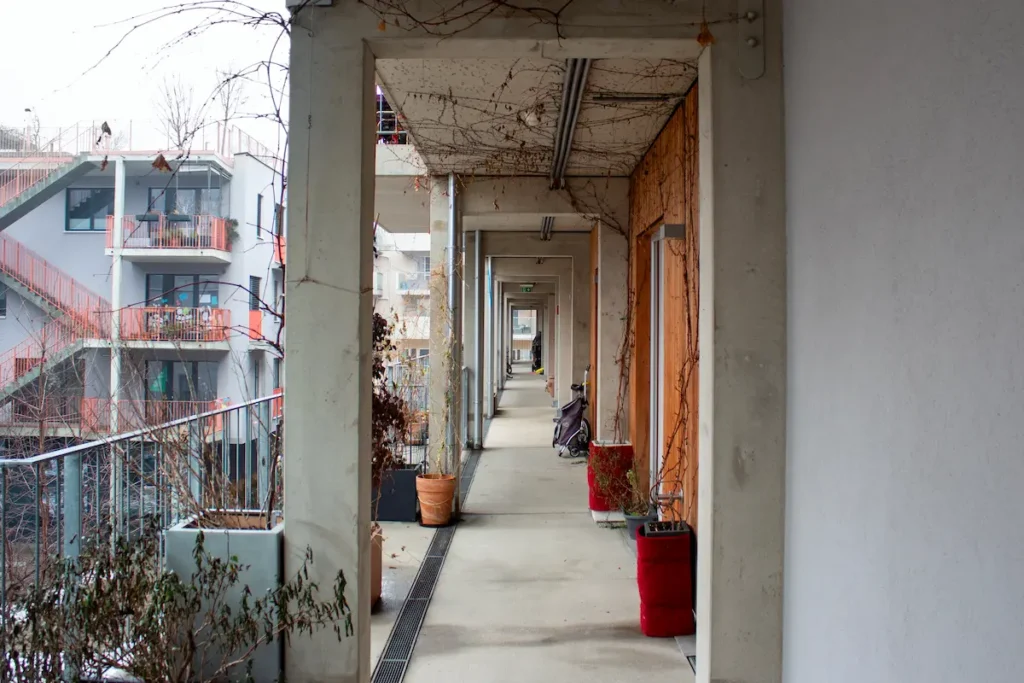
“I feel like the architecture is fluent. You know, they can always move in circles around the house, and in the apartment. So there’s always movement and different possibilities. I find that very freeing.” –Katharina Urbanek, resident and architect of Kohlenrutsche Cohousing in Vienna
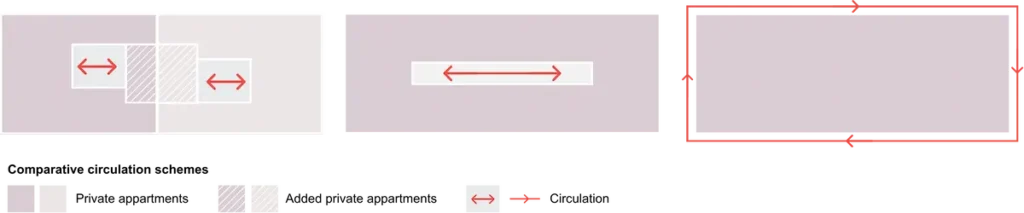
The circulation is another important point to consider when planning a cohousing project. Do you want interior circulation or external ? Do you want one big central staircase or multiple ? Wohnprojekt Wien and Que(e)rbau made the decision to build one large central staircase. With one look, you get a glimpse of all the floors. By limiting the circulation to one space only, you maximize the chance of neighbors running into each other. Some other projects, like Kohlenrutch, decided on two main staircases, freeing up some space to add more apartments to each floor. This creates smaller micro communities within a bigger one. In Gleis 21, they chose exterior circulation, with a steel staircase, connected to wraparound balconies. Those balconies create a wave-like movement, expanding and narrowing, offering extra space to chat and hang out, making spontaneous meetings more comfortable. Those low threshold spaces generate more intimate interactions which balance nicely the bigger, higher-stakes communal space such as a shared kitchen. Marcell Komlós, confirms the success of this idea. He explains that “it’s working very well. It’s impossible to leave your apartment without bumping into someone. And when you bump into someone in this kind of environment, unlike a closed corridor, you can actually feel like it’s an okay space to stand with more than two people without blocking the way for other people and have a conversation. So it happens almost every day.”
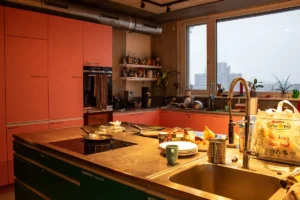
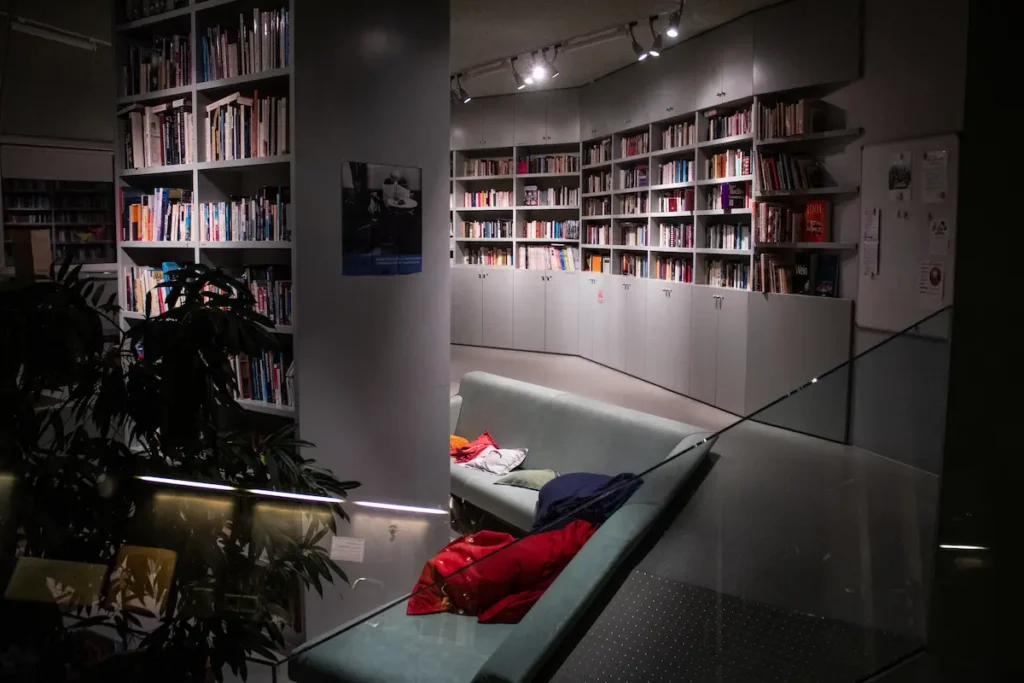
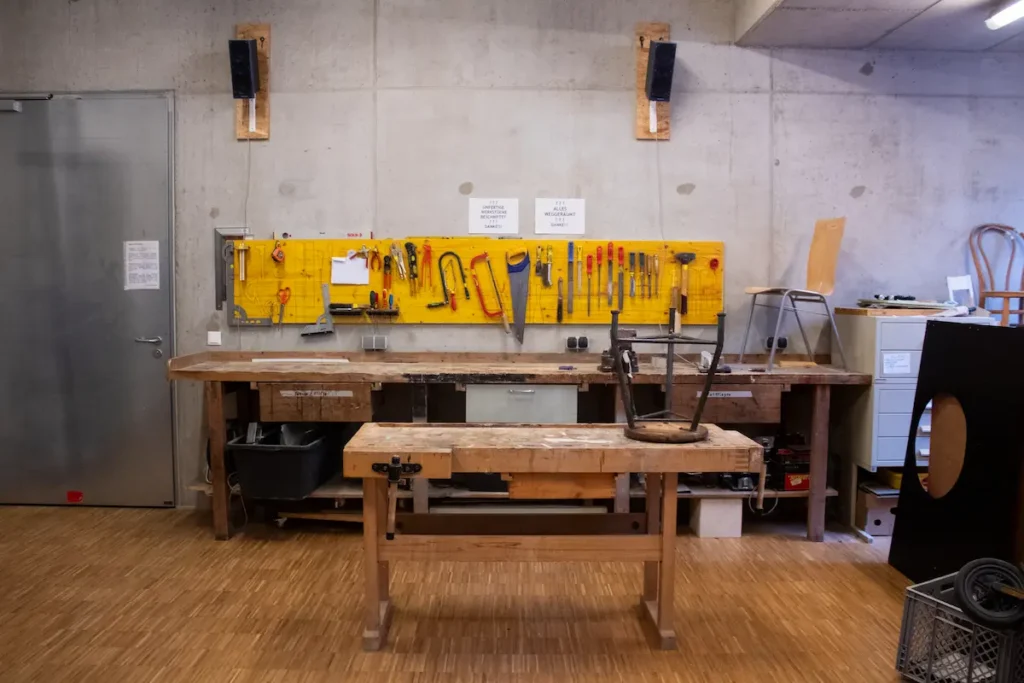
What differentiates the most cohousing projects from the rest is the extra space and functionalities given to the residents. There are all sorts of common space : a kitchen, a living room, a playroom for children, a garden, a terrace, a coworking space, a sauna, a relaxation room that can be used for yoga or meditation, a conference or event space, a gym, a library, a workshop, a creative atelier or a guest house. Those are all the different functions that can be offered to the community, but there are also more technical areas, like storage space, bike shed, parking that are present in typical residential buildings. Some cohousing projects, additionally, offer public service such as a café, a restaurant, an exhibition space, a bath house, a market or a bike shop. It is highly beneficial because for the same rent price, residents get a lot of extra space. Katharina Urbanek from Kohlenrutsche describes that for her“this 750 square meters is a lot of space, but I use almost all of it at some points during the week or the month.” For Wohnprojekt Wien, they had the idea to live a more sustainable life, reducing their carbon footprint by maximizing shared space. Heinz Feldmann explains : “The idea was to have this good life in abundance by reducing personal square meter usage. If you can outsource functions of your day to day life into common areas, then you can reduce your personal square meters a little bit without losing comfort.”
While offering shared spaces and having an open-minded community helps a great deal in fostering connection, designing an open and visually connected architecture is equally important. Transparency is highly valued in cohousing projects as a design tool to maintain a sense of connection. Allowing visual contact between different rooms, or between the exterior and interior, helps residents connect more with each other. It is very easy to feel isolated in an enclosed, opaque space, but when spaces are comfortably accessible, for example through a glass door, even a simple visual link with your neighbors can ignite a small moment of connection. Katharina Urbanek illustrates this well: „I think the spaces are very accessible. You always have these glass doors to see what’s happening. Especially when you come home, you can see who’s there. You find yourself greeting each other through the doors even though you’re not really doing anything together at the moment.” While transparency is often reserved for communal spaces, Sargfabrik takes a different approach. The private flats are designed with huge windows through which you can see everything outside, and everyone can see you, but adding curtains is not an option for Gerda Ehs, a longtime resident and member of the association. She describes the flat as„a sort of public space.” The real experience, she explains, is that „you see everything, and constructing privacy inside becomes the main thing.”
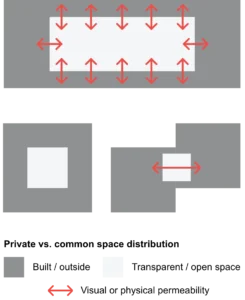
“We wanted the architects to create communicative spaces, spaces that make communication and meeting easy without having to make an appointment all the time. And one of the ways the architects interpreted this was that they tried to have as many visual angles, see throughs as possible. So you sit here, you see the kids in the playroom. You don’t hear them that loud because there’s a glass tour. So we call it our children’s terrarium. You see who is in the garden. And if you come in at the main entrance, you already see who is in the kitchen.” – Heinz Feldmann, resident and founder of Wohnprojekt Wien
Natural light is another powerful tool to create comfort for residents. It creates a feeling of safety that makes certain spaces more desirable to linger in. With an open, light-filled home, residents themselves feel lighter and more at ease. Heinz Feldmann explains that in Wohnprojekt Wien, “You always have these communicative areas and what you also have is you always look into the light. There is no dark angle because the building is open.” In Kohlenrutsche, they designed patios next to the basement, allowing a great deal of natural light into the area while connecting it to the courtyard. The basement then becomes a comfortable and open space. In other contexts, dark and enclosed layouts may be favored as an opportunity to disappear and disengage, but cohousing benefits from openness and light, making it a little harder to disengage. Building familiarity through an architecture that pushes unavoidability will strengthen connections over time. Residents accept, and even appreciate, a certain degree of visual permeability because trust has already been established.
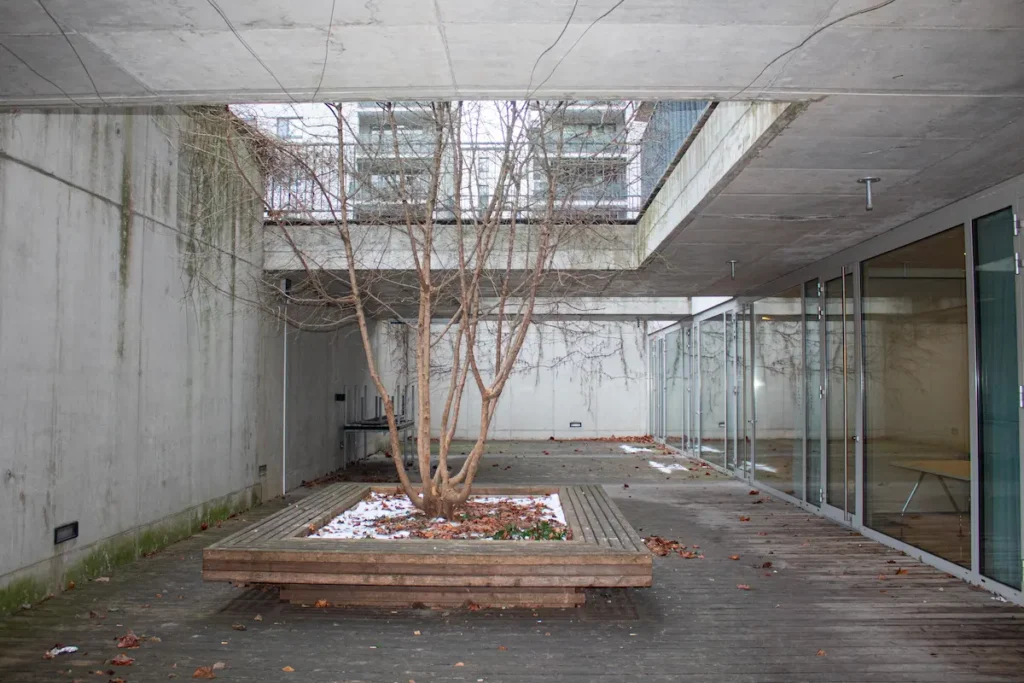
For Arnold Brückner, architect of Gratzelmixer, the entrance is just as important. In his project, it is the heart of the building, not just a place for residents to connect, but for the whole neighborhood. The entrance is arranged around a welcoming outdoor space. The first impression residents, neighbors, or guests have of the building should be visually open, inviting curiosity inside.
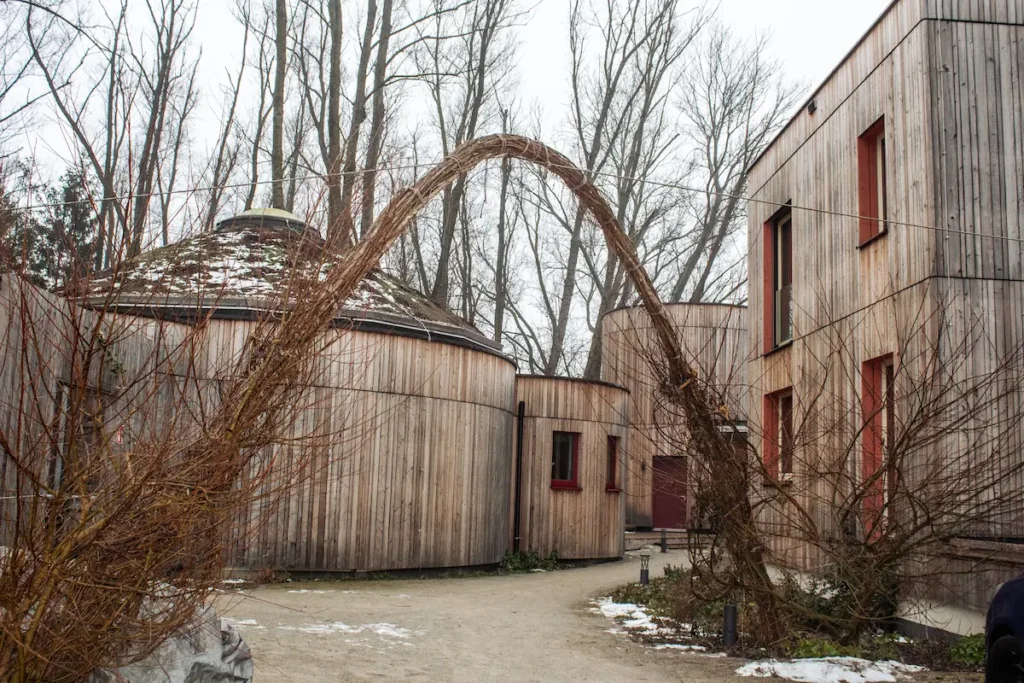
In general, the architecture of cohousing projects is meticulously planned and well-thought-out. It’s a collaborative process in which the residents have an active say in the design. Roland Hampl resident and architect of Que(e)rbau sat down with each resident and asked them a simple question : “How do you want to live?”. The goal was to encourage them to “rethink their own concept of living”. The purpose was to conceive housing that feels personal to its residents while making sure it still works in 20 years. This subtle balance is an important aspect in the building of a community. If residents feel more connected to their space, they will feel more comfortable and connected to each other. Even with limited resources, it’s still possible to create a design that doesn’t feel commercialized or prefabricated. Auenweide’s residents had a desire for an organic architecture that reflected their vision. Markus Spitzer, resident, explained how they were able to achieve this : “A few (houses) are mirrored in the middle and others just change their position. The architect had to find some ways to make it feel organic and different. So you come in and you have the feeling that they are different houses somehow. But the houses themselves are completely the same actually. They were constructed in mirrored layers. We kind of try to do it as standardized as possible because of money and let it feel like it was different. It’s a trick from the architect.”
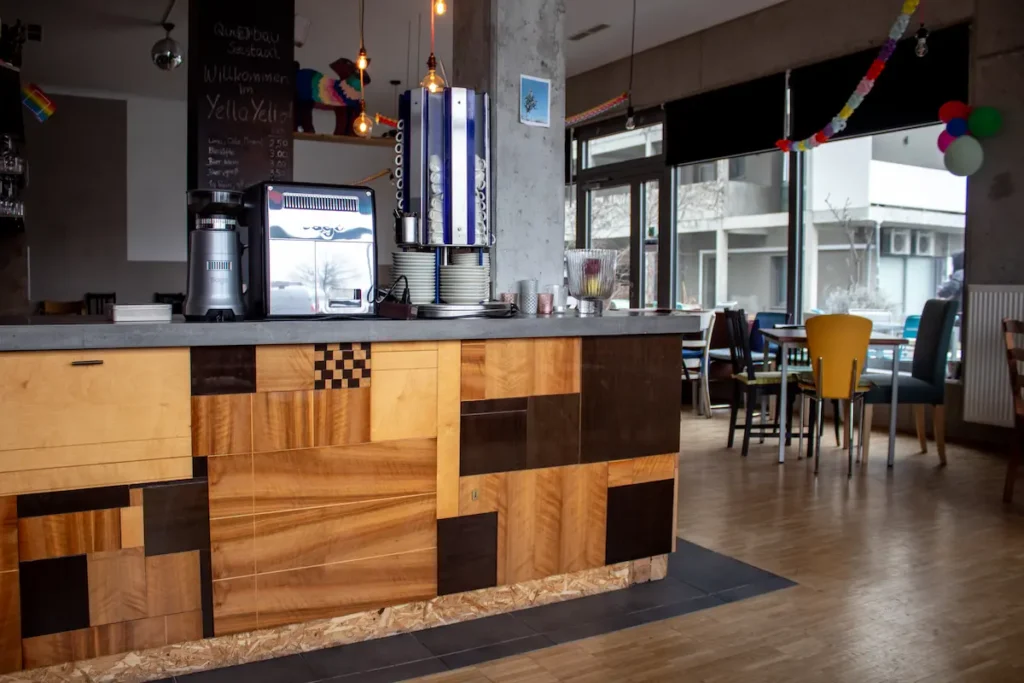
Architects generally aim for designs that are adaptable, fitting everyone’s needs. In Wohnprojekt Wien, the plan was to create apartments with flexible walls, allowing each resident to configure their space according to their own preferences and needs. In practice, however, this proved less functional, as systems such as electrical wiring and heating are not as easily adaptable. That said, even conceiving a more open floor plan can already make a significant difference. When possible, cohousing projects focus on building personalized apartments for everyone, taking into consideration all of their needs. But what happens if a resident decides not to move in, and the apartment doesn’t fit anyone else’s needs? Bruno Sandbichler reminds us that „the community cannot be interested in very special things because you always have the problem of renting it out again, if possible quickly, because otherwise the community pays for it.” It is important that residents are able to appropriate their own space through different initiatives, such as in Vinzirast or Que(e)rbau, where residents made some of the furniture for the communal spaces, such as the restaurant’s bar. Working together in the construction strengthens bonds. They are not just using a space, they are making it, together. The relationship with cohousing is fundamentally different from that with typical housing. The time and effort invested heighten the sense of belonging. Everyone is able to contribute, each at a different level, bringing different skills; it is a collaborative process that does not exclude anyone. It takes years to create a project from scratch, and the community goes through a great deal together; with each decision they make, they build a deeper understanding of one another. Gerda Ehs from Sargfabrik explains : “It’s such a low level of communication. It’s sort of an intimacy because we have known each other for 40 years, nearly 35, 36 years. And we’ve been together through a lot of troubles and struggles.”
A cohousing project is not just about making a space, it is also about the process of taking care of it. Bruno Sandbichler explains that „it’s one of the big differences with cohousing: once people move in, in normal housing they start to destroy the building, but in cohousing they start to make it better.” In typical urban housing, the building is often neglected by the residents, too focused on their own space, but cohousing differs as it creates a sense of shared responsibility. The maintenance of a home, on your own, can be overwhelming and expensive, but with the help of a community, you are able to receive great support. It is exactly this shared responsibility for the space that helps build a sense of community. Each project decides its own rules and systems, but one concept holds true everywhere: you must leave a space better than when you found it. Some projects implement working groups to divide the governance of each communal space, or an online booking system. These serve not only as administrative necessities but also as small community-building exercises. People have to talk to each other to decide how they use the space, what the rules are, and how they finance it. Hearing everyone’s experience and opinions about their living environment is how people really get to know each other. Trust is built because you know someone will take care of things when that responsibility falls to someone else.
To create a successful community, the architecture needs to be fueled by a founding culture. In conversation with Markus Spitzer, he referenced Peter Drucker’s famous quote „culture eats strategy for breakfast”, explaining that while you can establish the best strategy possible, the most effective way to achieve long-lasting results is to build a culture. „If you build a culture, things are going to organize themselves.” An interesting example came up during my visit to Gleis 21. The architect had the idea of designing a wash bar, adding a counter to the laundry room with the intention of giving residents a place to have a drink and connect with their neighbors while doing their laundry. In reality, however, no one uses it, and the counter is covered with packages and products, because the habit was never built around it. Conventional housing is designed from an individualistic perspective, while cohousing treats culture as something that must be actively designed for.
“It seems that cohousing is somehow connected to the way we live, the way we understand family and the way we understand life all together. Only people who are a bit like minded are interested in doing that. So it's a cultural thing actually, interestingly.” - Markus Spitzer, resident and founder of Auenweide
To summarize, in order to conceive an architectural design that improves interpersonal relationships in cohousing projects, many different aspects must be thought through:
- Organizing the spaces and circulation around a clear hierarchy of private to communal areas. This will allow open and fluid movement, igniting spontaneous meetings. The key is to turn everyday paths into opportunities for connection.
- Deciding what communal functions to build, where and how. This will ensure spaces that will foster connections between the residents. The sense of community must not be left to chance but should be supported by designated spaces.
- Planning an architecture that is open, through transparency, visual angles, light and adaptable design. This will influence the ability and drive of the residents to connect. Architecture should make connection easy and comfortable rather than effortful.
- Personal identity will serve the community, as it is a collaborative process and every voice shapes the result. A community where everyone’s personality can flourish will build a strong mutual trust and safety that holds a community together.
- The architecture must be fueled by shared responsibility and culture.
I learned a lot through this research and the unique projects I visited. First, European housing culture tends to be too individualistic. Visiting Vienna, a city that prioritizes social housing and community-led neighborhoods, showed me an accessible alternative. I come from a mixed French-Moroccan family, and I’ve always appreciated how open and connected Moroccans are compared to my experience in France. Studying cohousing up close this year, and meeting happy and fulfilled cohousing residents, inspired me to incorporate it into my own future. Second, analyzing intentionally designed architecture, not just through plans, but through real life, successful examples, was deeply inspiring. It gave me tools that I will carry throughout my career. I hope to one day contribute to an architecture that makes a real difference. Cohousing may not be for everyone, but I believe it can help many people.
